Patient Care

Anti-infective Eye Ointment

2026/07/07
What is the medication for?
Eye infections are commonly caused by bacteria, fungi, or viruses. Most superficial infections can be treated with anti-infective eye preparation, such as eye ointments. Your doctor will prescribe the appropriate anti-infective eye preparations depending on the cause of infection. 

Eye ointments are sticky oil-based medication. In general, the effect of eye ointment tend to last slightly longer than its eye drop counterparts due to its sticky texture.  
How should I take/use this medication?
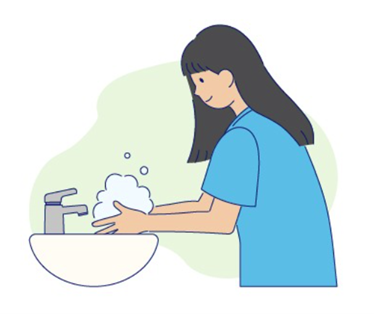
  1. Wash your hands thoroughly with soap and water then dry them
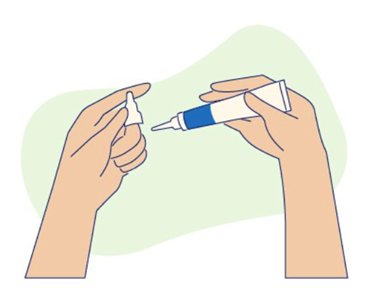
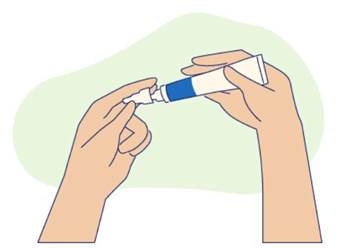
  2. Remove the cap from the tube to open it. Hold the tube as if you're holding a pen.
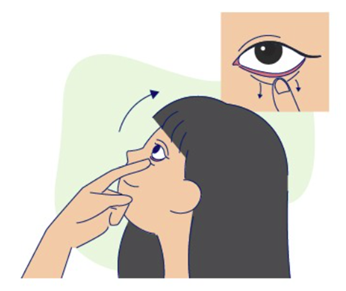
  3. Tilt your head back slightly and look up. Use the index finger of your free hand to gently pull down your lower eyelid to form a pocket.
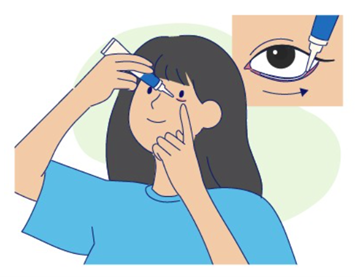
  4. With a sweeping motion, squeeze the tube to apply about 0.5 cm to 1 cm of the ointment inside the pocket of your lower eyelid. Ensure that the tube’s tip does not touch your eye, lid or lashes to avoid contamination.
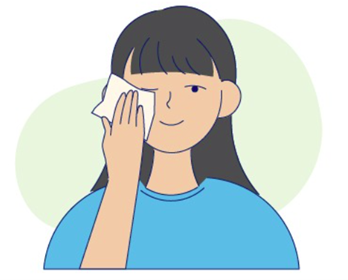
  5. Gently blink your eyes a dew times to spread the ointment inside your eye. Close your eyes for 1 to 2 minutes, then wipe away any excess ointment from your lids and lashes using a clean tissue.
  6. Close the tube by recapping the lid. Store the eye ointment in a cool area or as instructed on the label.

Other information:

  • Read the label on the tube carefully before using the eye ointment.
  • Using a mirror may make the application of eye ointment easier.
  • If you need to apply both the eye, drop and ointment, you should apply the eye drop first. Wait for at least 5 minutes before applying the eye ointment.
  • If you need to apply more than one eye ointment, wait for at least 10 minutes before applying the next eye ointment.
  • Applying eye ointments may cause your vision to become blurry for a short period of time. You should avoid driving, operating machinery, or doing things in places with poor lighting until your vision clears.
  • Anti-infective eye preparations are prescribed for your current eye condition only. Do not reuse or exceed the prescribed duration of treatment.  

For contact lens wearers:

  • Remove your contact lens before applying the ointment. You can put them on 30 minutes after applying the eye ointment.
  • Contact lens wearers who are advised by a doctor NOT to wear contact lenses should strictly follow the doctor’s advice. 
What should I do if I forget to take/use this medication?
If you forget to use a dose, use it as soon as you remember. Then use your next dose at the usual time. Do not use two doses to make up for the missed dose.
What precautions should I take?

Inform your healthcare professional if: 

  • You are allergic to this medication or any other ingredients of this medication.
  • You are pregnant, planning to become pregnant, or breastfeeding.
  • You have glucose-6-phosphate dehydrogenase (G6PD) deficiency.
What are some common side effects of this medication?
  • Stinging or burning sensation 
  • Eye Redness 
  • Eye Irritation 
These symptoms are usually mild and will subside after some time. Check with your healthcare professional if these conditions are severe or do not improve. 
What are some rare but serious side-effects that I need to seek medical advice immediately?

Signs of worsening infection (e.g. pain, fever, progressive decline in vision or hearing abilities) 

The symptoms of a drug allergy include one or more of the following:  

  • Swollen face/eyes/lips/tongue 
  • Difficulty in breathing 
  • Itchy skin rashes over your whole body 

If you experience any of these symptoms, you should stop your medication and see your healthcare professional immediately. 

How should I store this medication?
Store in a cool and dry place, away from direct sunlight. Keep this medication away from children. 

For medications that need to be refrigerated, store in the refrigerator between 2 - 8⁰C. Do not freeze. 

Record the date opened on the container. Throw it away immediately once contaminated or after reaching its in-use shelf life as recommended by the manufacturer. 
How should I throw away this medication safely?
Pack this medication into a black trash bag and seal it tightly before throwing it into the rubbish chute or bin. 

Disclaimer:

  • Please take note that the above is not a complete list of all possible side effects. If you have any concerns about your medication or if you have other side effects that you think are caused by this medication, please consult your doctor or pharmacist.
  • If you take more than the recommended dose, please seek medical advice immediately.
  • The information provided on this page does not replace information from your healthcare professional. Please consult your healthcare professional for more information.

Back to 'Medications' >


1E Kent Ridge Road, NUHS Tower Block, Singapore 119228
Last updated on
Best viewed with Chrome 79.0, Edge 112.0, Firefox 61.0, Safari 11
National University Health System
  • National University Hospital
  • Ng Teng Fong General Hospital
  • Alexandra Hospital
  • Tengah General and Community Hospital
  • Jurong Community Hospital
  • National University Polyclinics
  • Jurong Medical Centre
  • National University Cancer Institute, Singapore
  • National University Heart Centre, Singapore
  • National University Centre for Oral Health, Singapore
  • NUHS Diagnostics
  • NUHS Pharmacy
  • NUHS Regional Health System Office
  • NUS Yong Loo Lin School of Medicine
  • NUS Faculty of Dentistry
  • NUS Saw Swee Hock School of Public Health
Back to Top