Sepsis Value-Driven Outcomes (VDO) in National University Hospital (NUH)
Case study
Background
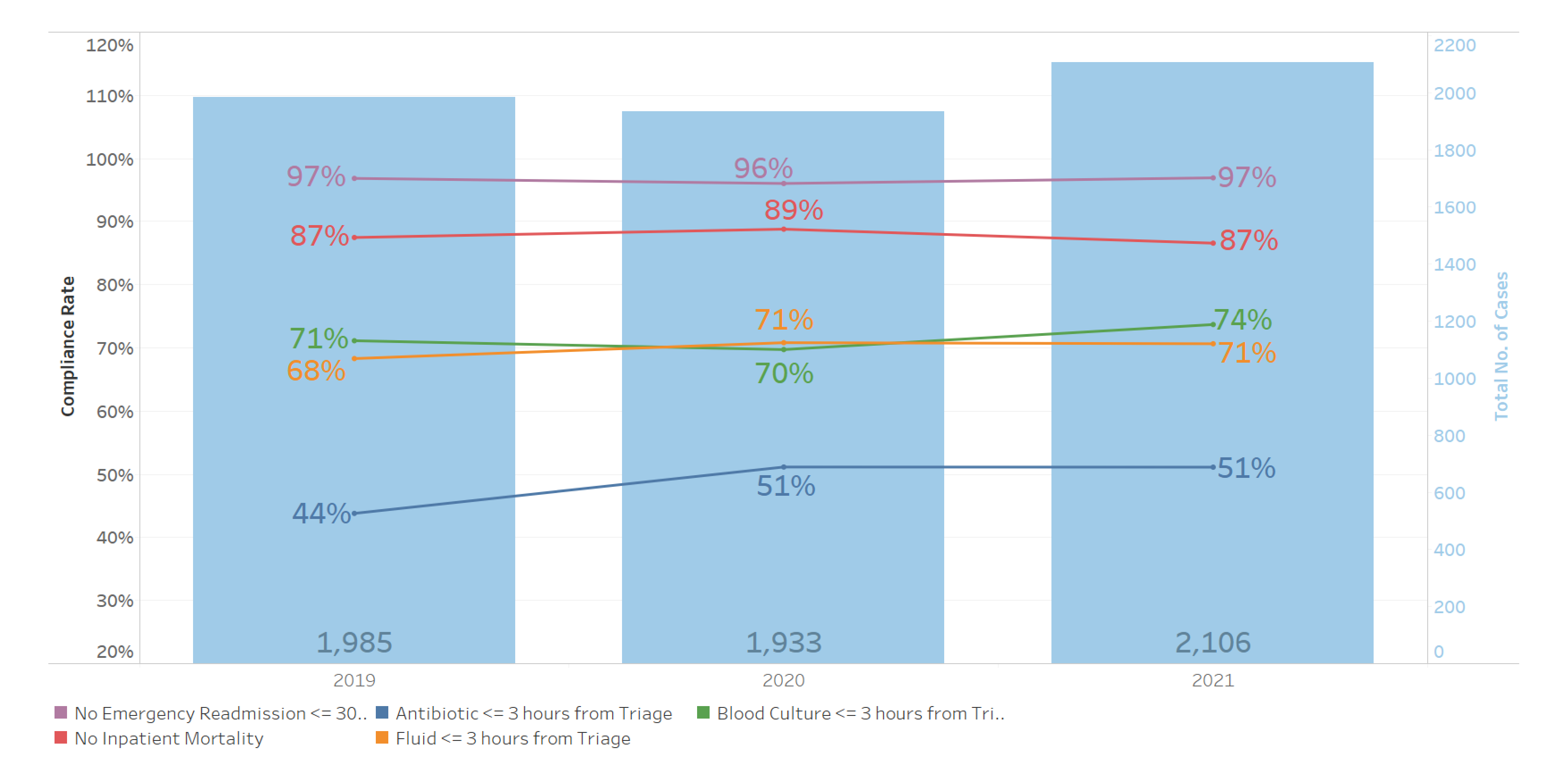
Community-acquired sepsis in Singapore incurs high morbidity and mortality. In 2019, there were 1,985 cases of sepsis at the National University Hospital (NUH), resulting in a sepsis inpatient mortality rate of 13%. To address this and improve clinical outcomes, our value-based sepsis care project (sepsis VDO project) was launched in 2017.
Objectives
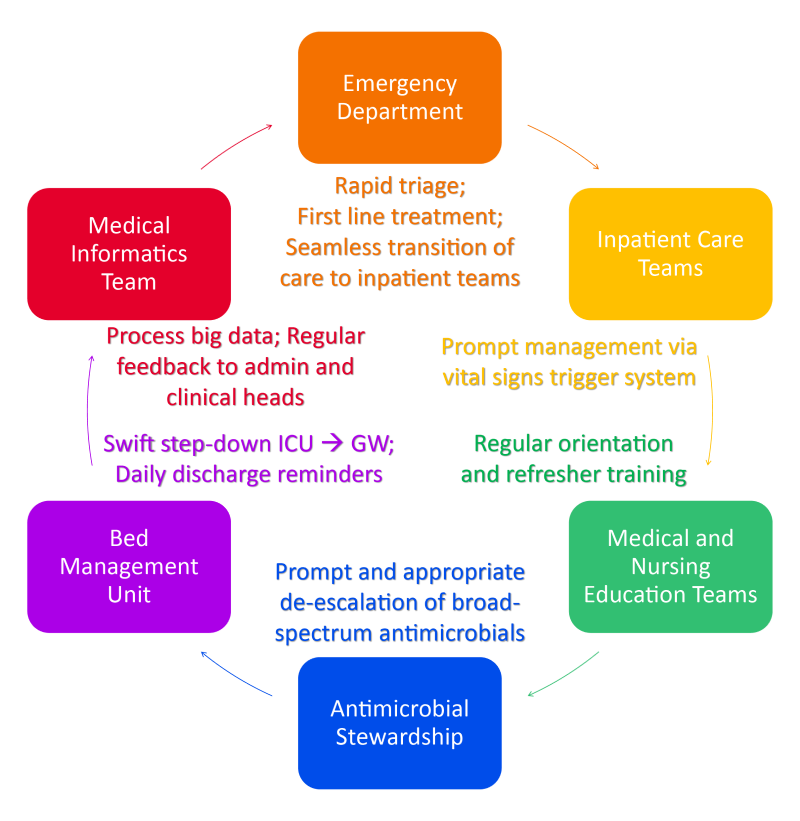
The primary objective of this project is to encourage the continuous improvement of our "Value of Care" by increasing clinical quality while simultaneously reducing costs. Furthermore, we aim to minimise any variation in the treatments delivered to sepsis patients, ensuring consistent, high-quality outcomes across the board.
Methodology
2017
| Conceptualisation of Sepsis VDO (Emergency Department, Department of Medicine, Medical Informatics Team, Finance team), literature review, determined quality indicators and costs to be measured |
|---|
2018
| Cascaded downstream by training of ground teams (simulation sessions)
|
|---|
2019
| Sepsis management concepts and processes implemented and introduced to junior doctors during orientation
|
|---|
2020
| Enhanced "Trigger Programme" initiative
|
|---|
2021
| Reinforcement of key clinical concepts through intensive and remote education efforts; feedback loops with clinical departments |
|---|
Quality Indicators
To track the success of our value-based sepsis care model, we monitored the following key quality indicators:
- No inpatient mortality
- No emergency readmissions ≤ 30 days (same cause)
- Blood cultures (within 3 hours from triage)
- Antibiotics (within 3 hours from triage)
- Intravenous fluids (within 3 hours from triage)
Results
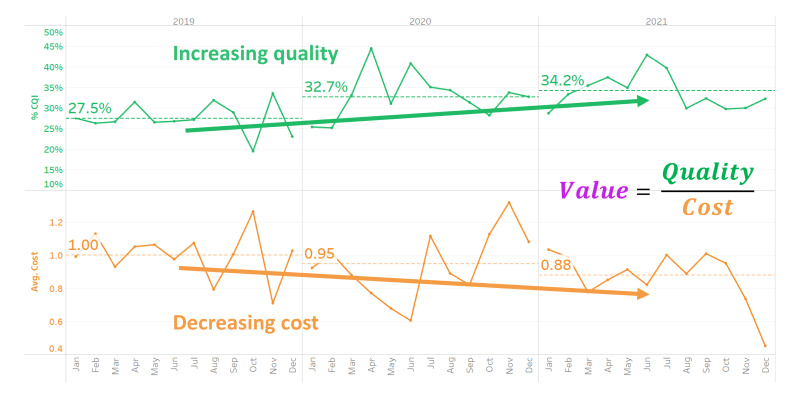
- Increase in Clinical Quality Index (CQI) driven by decreasing cost and increasing quality
- An absolute decrease of 12% points in mean total cost per patient from 2019 to 2021
- Antibiotics administration within 3 hours of triage. Increase of 7% to 51% in 2021.
- In 2021, 32% of patients experience Perfect Quality of Care compared to 25% in 2019. (Increase of 7%)
- Rate of appropriate de-escalation of antibiotics. Increase of 1% to 95% in 2021 when compared to 2019
- Average length of stay. Decrease of 3 days from 17 days in 2019 to 14 days in 2021.
- Stable inpatient mortality between 11% and 13% (compares favourably to 18.3% in ANZ)
Conclusion
Improvements in CQI and minimising variation in care were achieved and sustained without compromise in sepsis inpatient mortality, demonstrating the resilience of our value-based sepsis care model in Singapore, despite the challenges posed by the COVID-19 pandemic in 2020 and 2021.