FROM PIONEER TO NATIONAL ADOPTION
VDO expanded from pilot projects to a cluster-wide approach, influencing healthcare transformation across NUHS. The principles, practices and insights developed at NUHS helped shape Singapore’s broader journey towards Appropriate and Value-Based Care.
2017 | VDO expanded to more conditions at NUH and was adopted by Ng Teng Fong General Hospital (NTFGH), marking an important step in scaling value-based healthcare across NUHS.
NUH added another 13 conditions – Laparoscopic Cholecystectomy, Hysterectomy, Caesarean Section, Streamline Workflow for Intervention of non-Functional or Thrombosed dialysis access (SWIFT), Hernia, Chronic Obstructive Pulmonary Disease (COPD), Bronchiolitis, Transcatheter Aortic Valve Implantation / Transcatheter Aortic Valve Replacement (TAVI/TAVR), Stroke, HyperAcute Stroke, Coronary Artery Bypass Graft (CABG), Breast Cancer and End-of-Life.
NTFGH became the second public healthcare institution within our cluster, to adopt the VDO framework and they started with six VDO projects – Total Knee Replacement, Cataract, Hip Fracture, Laparoscopic Cholecystectomy and Pneumonia.
2017 | MOH officially adopted and scaled NUHS’ early framework into the National Value-Driven Care initiative, with all public healthcare clusters participating.
Singapore’s Ministry of Health (MOH) adopted NUHS VDO initiative and introduced the National Value-Driven Care (VDC) initiative to all public healthcare institutions. VDO formed a crucial pillar in support of MOH’s “3 Beyonds” – Beyond Healthcare to Health, Beyond Hospital to Community and Beyond Quality to Value.
As a result, 17 ‘high impact’ conditions from the national perspective were identified to embark on the initiative by MOH.
In the same year, NUHS was awarded the Gold Award at the National Health IT Summit.
“We were able to leverage data from our existing IT system to create the VDO framework. We pulled data from different silos and amalgamated it. Our biggest success was partnering enthusiastic Clinician Champions who provided meaningful insights to drive clinical change with improved patient outcomes.”
A/Prof James Yip, Executive Director, National University Heart Centre, Singapore (NUHCS)
2018 | The integration of VDO with quality improvement initiatives achieved $13 million in cost avoidance and earned NUHS the National Clinical Excellence Team Award at the National Medical Excellence Awards. The expansion of VDO into primary care further extended value-based healthcare across the care continuum.
NUHS VDO Office partnered with NUH Quality Improvement (QI) Department to drive Value-Driven Outcomes initiatives, and Rapid Improvement Event (RIE) to streamline processes, including:
- Transcatheter Aortic Value Implantation RIE
- Lumbar Spinal Fusion (LSF) RIE
- Heart Failure RIE
- Hernia & Laparascopic Cholecystectomy RIE etc.
NUH and NTFGH added more projects into the VDO framework for continuous improvement. High performance projects achieved a total cost avoidance milestone of approximately $13 million.
The National University Polyclinics (NUP) also embarked in VDO for Lipid and Hypertension conditions.
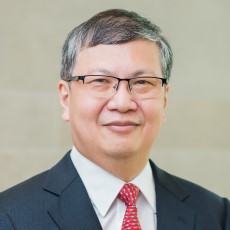
“VDO aims for sustainable patient care and outcomes. The three pillars, Finance, Data and Culture are equally important. Transparency of actual and predictable costs and outcomes provides the needed visibility, which is a key enabler to maintain sustainability.”
Ms Wong Soo Min, Group Chief Financial Officer, National University Health System (NUHS)
2019 | VDO became embedded across NUHS care delivery and strategic initiatives, covering approximately 20% of caseloads and 30% of clinical costs while driving data-informed improvements in outcomes, resource utilisation and population health.
Institutions continue to identify new projects and potential gaps for improvements which eventually translated to improved value and incredible care to patients.
Recognised for the value it brings, VDO was extended to support various cluster-wide strategic and research projects such as VECTor, Optimisation of Drugs Utilisation, and Application of Frailty Score on geriatric patients etc.
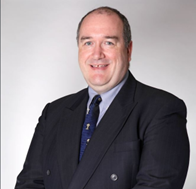
“VDO is a powerful tool measuring relevant data for all members of the healthcare team. It is patient-centric and allows clinicians to be cognisant of patient outcomes and benchmark themselves against their peers. Going forward, it will be increasingly important as we tackle the healthcare needs of a more elderly population whilst trying to ensure the health of the population under the care of NUHS and that of the nation as a whole.”
Adj A/Prof Diarmuid Murphy, Group Chief Value Officer, National University Health System (NUHS)